salakhalimunmountain.com – Navigating the ancient, mist-shrouded wilderness of Halimun Salak National Park is an extraordinary adventure, but it is also a true test of physical endurance. The park is famous for its steep ridges, dense canopy light filtering through old-growth trees, and trails that can transform from hard-packed volcanic earth to soft mud within minutes. When you are traversing these variable terrains, maintaining your balance and protecting your joints becomes a top priority. Choosing the right trekking poles for Halimun Salak Park is one of the most critical gear decisions you can make to ensure a safe, stable, and deeply enjoyable journey through Java’s premier rainforest kingdom.
A high-quality pair of trekking poles acts like an extra set of limbs, distributing the weight of your backpack and reducing the impact on your knees during long, punishing downhills. In a primary rainforest environment where moss-covered rocks, exposed tree roots, and slippery volcanic clay are the norm, relying on your balance alone can quickly lead to fatigue or an unexpected slip. By integrating the proper poles into your gear kit, you gain the stability needed to confidently step through the wild landscape, allowing you to focus your attention on the incredible sounds of the jungle rather than just the hazards at your feet.
Shaft Materials for the Rugged Javanese Terrain
When selecting your trekking poles, the first decision to consider is the shaft material, which directly impacts the pole’s weight, durability, and performance on the trail. Carbon fiber is incredibly popular among modern backpackers because it is exceptionally lightweight and excels at absorbing vibrations, keeping your hands and wrists comfortable during long days of hiking. However, carbon fiber can be brittle under high stress. If a pole gets wedged between two volcanic boulders or caught in a thick tangle of roots, a sudden lateral twist can cause it to snap completely, which can be a significant setback when you are deep in the backcountry.
For the unpredictable and demanding environment of Halimun Salak, high-grade aluminum poles are often the more reliable choice. Aluminum is slightly heavier than carbon fiber, but it is remarkably resilient and tends to bend rather than snap when subjected to extreme pressure. This durability is an invaluable asset when you are clearing unexpected obstacles or sliding down a steep, muddy slope after a tropical downpour. Having a pole that can withstand the rough, abrasive surfaces of volcanic rock ensures that your support system remains intact throughout your entire expedition.
Locking Mechanisms That Withstand Rain and Mud
The system that allows your trekking poles to adjust in length is another vital component to evaluate. Twist-locking mechanisms, which rely on internal expansion plugs, are sleek and lightweight but can be notoriously problematic in wet environments. The high humidity and persistent moisture of the Javanese rainforest can cause internal corrosion, while fine mud and grit can seep into the joints, causing the mechanism to slip unexpectedly when you lean your full weight onto the pole.
External lever locks, often called flip locks, are far better suited for tropical rainforest trekking. These locks are easy to operate even when your hands are wet or covered in mud, and they allow you to make quick adjustments to your pole length as the terrain changes. You can easily tighten the external tensioning screws with a small tool or a coin, ensuring a rock-solid hold that will not fail you when you are bracing against a steep incline. For maximum reliability on our muddy paths, a robust flip-lock system is non-negotiable.
Grip Materials Designed for High Humidity
The point of contact between your hands and your trekking poles determines your overall comfort and control. Standard plastic or rubber grips are common on budget poles, but they are far from ideal for tropical climates. Rubber does not absorb moisture, which means that as your hands sweat in the humid mountain air or become soaked by afternoon mists, the grips become incredibly slick. This lack of traction forces you to squeeze harder, leading to hand fatigue and painful blisters that can quickly ruin your trekking experience.
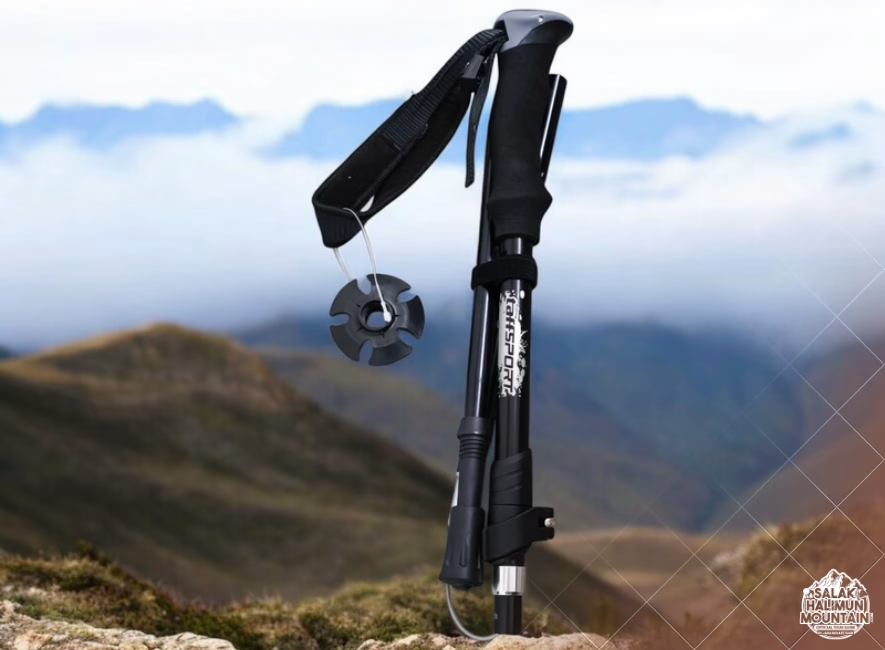
Instead, look for trekking poles featuring grips made from natural cork or high-density EVA foam. Cork is an excellent material because it naturally resists moisture, conforms to the shape of your hand over time, and stays cool even when the temperature rises. High-density foam is another fantastic alternative, offering a soft, comfortable texture that actively wicks sweat away from your skin. Many foam grips also feature extended sleeves that reach down the upper shaft, allowing you to quickly choke up on the pole when tackling short, steep climbs without needing to adjust the overall length.
The Importance of Secure Wrist Straps
Many hikers treat wrist straps as an afterthought, but they are an integral part of proper trekking pole technique. When adjusted correctly, the strap should support the weight of your hand and wrist, allowing you to maintain a relaxed, gentle grip on the handle. This pressure distribution prevents hand cramping and ensures that if you momentarily lose your footing, the pole stays securely attached to your arm rather than tumbling down a steep mountain ravine or into a rushing river.
For a humid rainforest environment, prioritize straps made from breathable, moisture-wicking materials with soft padding to prevent chafing against your skin. Avoid straps with harsh, abrasive stitching that can become irritated when wet. Taking the time to properly loop your hand upward through the strap before gripping the handle will instantly transform how the pole handles, giving you a fluid, energy-efficient stride that saves your strength for the long miles ahead.
Choosing the Right Tips and Baskets for the Trail
The business end of your trekking pole is what actually interacts with the earth, and configuring it correctly is essential for achieving maximum traction. Almost all high-quality poles come equipped with durable carbide or tungsten tips, which are designed to bite aggressively into hard dirt, decayed wood, and rough volcanic rock. These sharp tips provide an exceptional pivot point, allowing you to anchor yourself firmly on uneven surfaces and preventing your feet from sliding out from under you on steep sections.
However, when walking on exposed rock faces near volcanic craters or historical landmarks, bare metal tips can scratch the stone and cause minor slipping. Carrying a pair of removable rubber tech tips in your pocket is a smart solution. These rubber caps slip over the metal points, providing excellent friction on bare stone while simultaneously reducing the clicking noise of your poles, allowing you to immerse yourself fully in the natural symphony of cicada calls and whispering leaves without distraction.
Mud Baskets for the Rainy Season
Trekking poles typically ship with small, minimalist baskets designed for hard-packed summer trails. While these work well enough in dry conditions, they are easily overwhelmed by the soft mud trails of Halimun Salak, especially during the monsoon season. Without adequate surface area, a bare pole tip will sink deep into the wet volcanic soil, causing you to waste valuable energy pulling the pole back out with every single step.
Swapping your standard baskets for wider mud baskets is a simple modification that makes a massive difference in the jungle. Mud baskets act like snowshoes for your poles, distributing the downward force across a larger surface area and preventing the pole from sinking deep into the mire. This added flotation keeps your rhythm consistent, protects the locking joints from being submerged in abrasive mud, and provides a stable platform to push off from when navigating boggy sections of the trail.
Packed Size and Backpack Compatibility
There will be times during your trek when the forest becomes so dense or the scramble so steep that you need to put your poles away and use your hands to hold onto sturdy vines or roots. For these moments, how your poles pack down becomes incredibly important. Traditional telescoping poles collapse by sliding the sections inside one another, typically packing down to around sixty to seventy centimeters. This size is easy to lash securely to the exterior tool loops of most standard trekking backpacks.
If you prefer to store your gear inside your pack to protect it from thick brush and snagging branches, consider folding or Z-style trekking poles. These innovative poles are connected by an internal cord and break apart much like tent poles, collapsing down to a highly compact thirty-five to forty centimeters. This minimal packed size allows you to easily slip them into a side pocket or directly inside your main pack body, keeping your profile sleek and nimble as you navigate through the tightest corridors of the primary rainforest.
Walk Softly and Protect the Forest Ecosystem
As responsible adventurers, our choice of gear should always reflect a deep commitment to conservation and respect for the natural world. When using trekking poles within Halimun Salak National Park, always practice mindful placement. Avoid plunging your sharp metal tips into fragile moss-covered logs, delicate alpine flora, or exposed tree roots that can become damaged and susceptible to disease. By placing your poles carefully on the established path, you minimize your environmental footprint and ensure that this ancient sanctuary remains pristine.
Investing in the right trekking poles is ultimately an investment in your safety, comfort, and longevity as a hiker. When your body is properly supported by durable, reliable equipment, you can move through the wilderness with a profound sense of confidence and ease. You transform your trek from a grueling physical struggle into a soulful, immersive journey, perfectly attuned to the shifting mists, the towering trees, and the timeless magic of the Javanese mountains. Choose your tools wisely, prepare thoroughly, and let the trail lead you into the heart of the wild.
So, if you’re ready to explore the wonders of Mount Salak Halimun, head over to our ONLINE BOOKING PAGE and let’s start planning your adventure. Or simply CLICK THIS LINK to chat with us on WhatsApp.
With our team, you’re not just getting a guide; you’re gaining a local friend who will ensure your trip is nothing short of extraordinary.